© Château de Fontainebleau, distr. RMN-Grand-Palais / Raphaël Chipault
Fontainebleau: Where the Art of Yesterday Meets the Art of Today
Just an hour from Paris, Fontainebleau offers a fascinating journey through the history of art. Here, the refined beauty of a royal château meets the bold imagination of contemporary creation. The Château de Fontainebleau and Le Cyclop, hidden in the nearby forest of Milly-la-Forêt, may seem to belong to two completely different worlds. Yet together, they tell the same story: art is always a reflection of its time—and a bridge between generations.
The Château de Fontainebleau: Eight Centuries of Art and Power
The Château de Fontainebleau is much more than a royal residence. It is a living record of French history, shaped by monarchs from the Middle Ages to the nineteenth century. Kings, queens and emperors transformed the palace according to their ambitions and artistic tastes, leaving behind an extraordinary collection of architecture, paintings, sculptures, furniture and decorative arts.
The château reached a new level of splendour under King Francis I, one of the great patrons of the French Renaissance. Inspired by Italy, he invited leading Italian artists—including Rosso Fiorentino and Francesco Primaticcio—to decorate the palace. Their work gave birth to the School of Fontainebleau, a distinctive artistic movement combining Italian elegance, mythological imagery and French refinement.
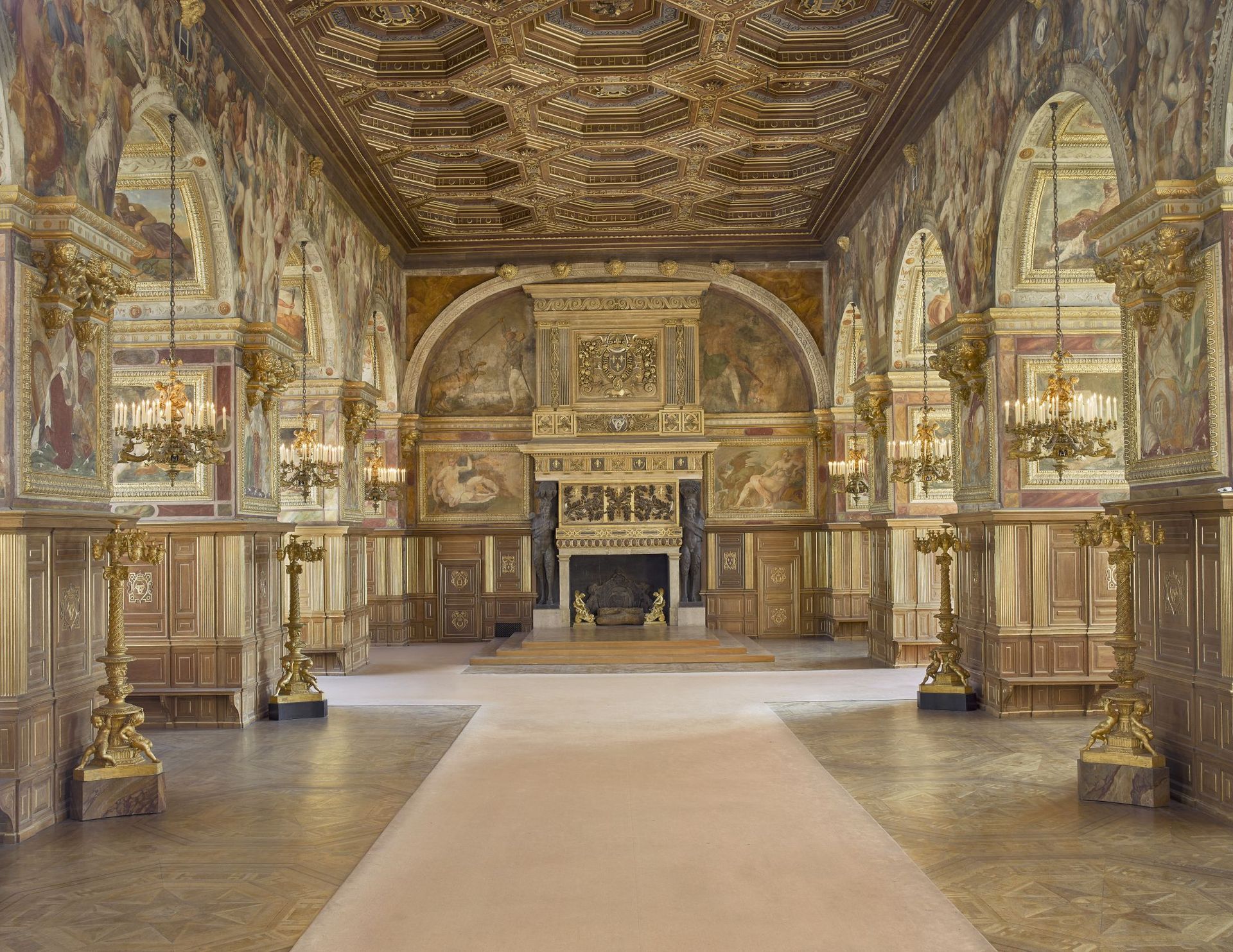
The Gallery of Francis I remains one of the château’s masterpieces. Its frescoes, carved woodwork and elaborate stucco decoration turn the walls into a theatrical celebration of royal power. Art was not simply ornamental: it conveyed political messages, expressed cultural ambition and helped create the image of the sovereign.
Later rulers added their own artistic language. Henry IV expanded the palace, Louis XV introduced eighteenth-century elegance, and Napoleon I transformed Fontainebleau into an imperial residence. Walking through the château is therefore like moving through successive chapters of French art history—from Renaissance frescoes to royal apartments and Empire-style interiors.
Le Cyclop: A Monument Born from Collective Imagination
A short journey from the château leads to a very different artistic experience. In the forest of Milly-la-Forêt stands Le Cyclop, a monumental sculpture created under the direction of Swiss artist Jean Tinguely. Begun in 1969, the work was developed over many years with the participation of Niki de Saint Phalle and numerous other artists.
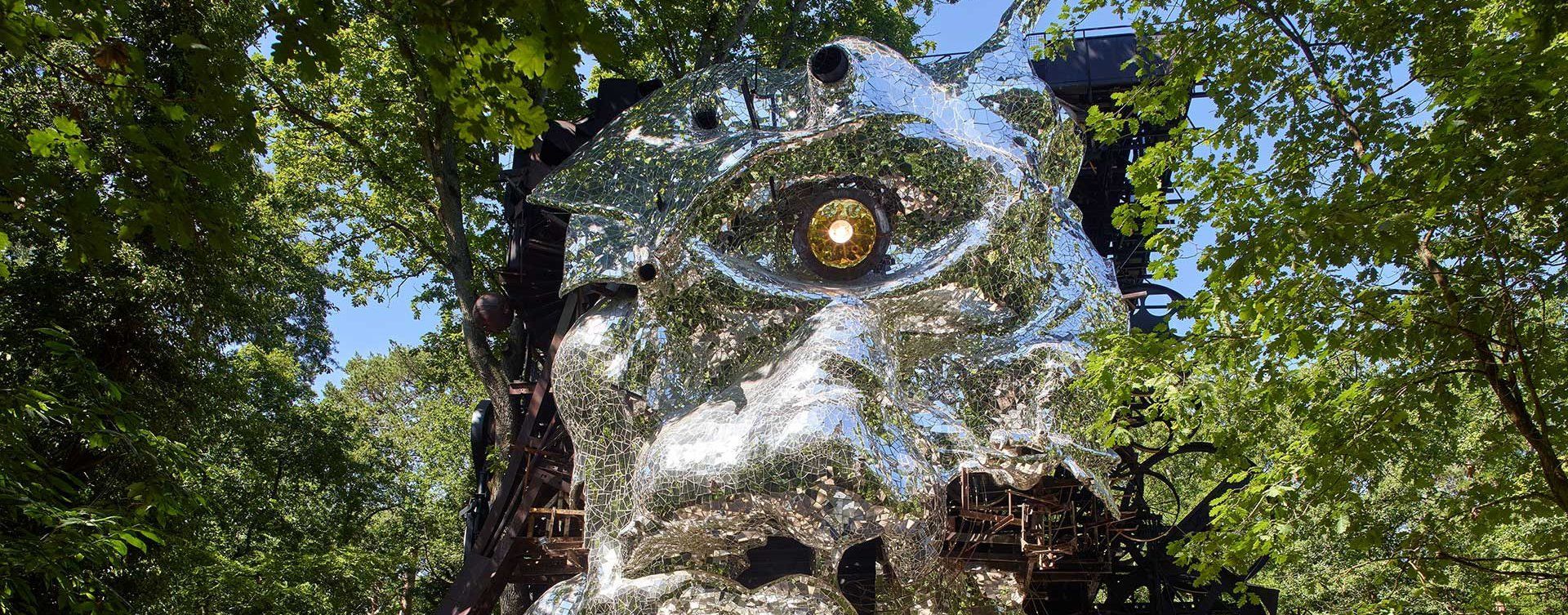
Rising among the trees, the gigantic head appears mysterious, playful and slightly unsettling. Its mirrored face reflects the forest, while its interior reveals a surprising world of moving machinery, sound, sculptural elements and artistic interventions. Visitors do not simply look at Le Cyclop—they enter it, move through it and become part of the experience.
Unlike a traditional monument celebrating a ruler or a military victory, Le Cyclop was born from friendship, experimentation and collective creativity. It challenges the idea of art as a precious object displayed at a distance. Constructed from industrial materials and animated by movement, it belongs to a twentieth-century artistic world in which artists questioned institutions, embraced collaboration and invited the public to participate.
The forest is not merely a backdrop. It is an essential part of the artwork. Light changes across the mirrored surface, vegetation grows around the structure, and natural sounds mix with the mechanical character of the sculpture. Le Cyclop is both a machine and a mythical creature—an artwork that seems alive.
Two Visions of Art, One Destination
At first glance, the Château de Fontainebleau represents tradition, order and royal authority, while Le Cyclop embodies freedom, experimentation and rebellion. One was commissioned by powerful rulers; the other was created by artists working together outside conventional spaces. One preserves the artistic heritage of centuries; the other transforms recycled and industrial materials into an immersive experience.
Yet these two places have more in common than expected. Both are total works of art, bringing together architecture, painting, sculpture and decoration. Both were created by many hands over long periods of time. And both reflect a desire to surprise visitors and transport them beyond everyday life.
The château shows how art once served power, prestige and the construction of a royal identity. Le Cyclop demonstrates how modern artists reclaimed art as a space for personal expression, shared imagination and creative freedom. Together, they reveal that artistic innovation is not limited to one period. The Renaissance artists of Fontainebleau were once as daring and contemporary as Jean Tinguely and Niki de Saint Phalle were in their own era.
A Journey Through Yesterday and Today
A visit combining Fontainebleau and Le Cyclop offers much more than two cultural attractions. It creates a dialogue between the art of yesterday and the art of today—from the splendour of royal galleries to the unexpected poetry of a monumental sculpture hidden among the trees.
This contrast makes the experience especially memorable. In the morning, visitors can admire the vision of kings, emperors and Renaissance masters. Later, they can step inside a modern artistic dream shaped by movement, humour and collaboration.
Fontainebleau reminds us that art is never frozen in time. Every generation inherits the past, questions it and creates something new. Between the château and Le Cyclop, history and imagination meet—offering a unique cultural escape where centuries of creativity continue to speak to one another.
Experience Fontainebleau with France Luxury Tour
France Luxury Tour can organize this visit as a seamless private experience, with luxury transportation and an expert guide who brings the history, art and architecture of Fontainebleau and Le Cyclop to life. The itinerary can be tailored to each your interests and pace, with door-to-door service from Paris and time for a refined lunch or other special arrangements along the way.
For a more complete escape, the experience can include an overnight stay in a beautiful hotel near Fontainebleau. The following day, guests can discover Barbizon, the charming artists’ village that inspired generations of landscape painters, before continuing to the magnificent Château de Vaux-le-Vicomte, renowned for its harmonious architecture, formal gardens and elegant seventeenth-century interiors. Together, these visits create an exceptional two-day journey through French art, history and art de vivre.
Best choice: Aigle Noir Fontainebleau – MGalleryA refined 4-star historic boutique hotel directly opposite the Château de Fontainebleau. Set in a former 16th-century mansion, it offers elegant rooms and suites—including a 65 m² luxury suite—and is ideal for a high-end cultural itinerary. Alternative with a spa: Hôtel & Spa Napoléon, a stylish 4-star property in the town centre with 10 suites, marble bathrooms and an intimate spa.For a more exclusive château stay: Château de Bourron, approximately 7 km from Fontainebleau, offers historic rooms and suites in a private château surrounded by a 40-hectare park. 
You can also combined the tour with Vaux le vicomte castle ; https://www.franceluxurytour.fr/experience/fontainebleu-vaux-vicomte-paris
Ready to Plan Your private Fontainebleau experience ?
When you are ready to shape these days around how you like to travel, you can speak with a travel designer who can build the itinerary around your pace and your interests.