Paris has 20 arrondissements, hundreds of distinct neighborhoods, and thousands of hotels, apartments, and boutique properties. For a first-time visitor, figuring out where to stay in Paris first time is often the most paralyzing planning decision of the whole trip. It should not be. The honest truth is that six neighborhoods cover almost every type of first-time visitor, and once you know which one fits your travel style, the rest of the accommodation search becomes straightforward. This guide gives you a direct answer for each type of traveler, with the trade-offs included. If you want to orient yourself across the full city before committing to a base, a private guided Paris city tour is one of the most effective ways to understand the city's geography first-hand before your first full day of independent exploring.
The arrondissement system works in a clockwise spiral from the center outward. The 1st is the historical heart. Numbers climb as you move further out. For practical purposes, first-time visitors should focus on the 1st through 8th arrondissements and Montmartre (18th). Everything else adds commute time without adding proportional value for a first trip.
Why Your Paris Neighborhood Matters More Than Your Hotel
Where you sleep in Paris shapes far more than your morning commute to the first sight on your list. It shapes the quality of your evening when you are too tired to travel far, the ease of getting between neighborhoods, and whether the city feels manageable or exhausting by day three. A hotel that saves 30 euros a night by placing you in an outer arrondissement with poor Metro access will cost more than that in taxis, wasted time, and the low-grade frustration of never quite being where you want to be. Central neighborhoods in Paris are worth the premium. This is one of the clearest trade-offs in travel planning.
For first-time visitors, the single most important criterion is walkability to at least two or three major sights. The Paris Metro is excellent but relying on it for every journey removes the incidental discoveries that make a Paris trip feel like a Paris trip. Stay somewhere central enough to walk, and the city opens up in a way that no transport map can replicate.
Best Neighborhoods in Paris for Tourists
The best neighborhoods in Paris for tourists depend entirely on what kind of traveler you are. The six below cover almost every first-time scenario. Each description includes the honest trade-off, not just the appeal, because the neighborhood that is wrong for your travel style will feel wrong regardless of how good the hotel is.
Le Marais (3rd and 4th): Best All-Round Choice for First-Timers
Le Marais is the neighborhood most consistently recommended for where to stay in Paris first time, and the recommendation holds up. It is one of the few parts of Paris where the medieval street plan survived Haussmann's 19th-century renovations, which gives it a texture that the wider boulevards elsewhere cannot match. The Pompidou Center sits at its western edge. Place des Vosges, Paris's oldest square, anchors the heart of it. Notre-Dame and the Seine are walking distance. The Marais has some of the city's best bistros and wine bars and moves from calm morning market energy to genuinely good evening life without the tourist density of the 1st.
The honest trade-off: parts of the Marais, particularly around Rue de Rivoli and the areas closest to the Pompidou, can feel tourist-heavy during the day. Book accommodation in the quieter streets of the 3rd (northern Marais) if you want the neighborhood feel without the foot traffic. Prices: mid-range boutique hotels typically run 180 to 280 euros per night. Budget options exist but tend to be further from the best streets.
Latin Quarter and Saint-Germain-des-Pres (5th and 6th): Best for Couples and Literary Travelers
The Left Bank neighborhoods of the Latin Quarter and Saint-Germain-des-Pres represent the Paris that writers and artists made famous. Streets are narrower, architecture older, and the atmosphere more contemplative than the livelier Marais. Cafes that once hosted Sartre and Hemingway still serve coffee on the same terraces. The Luxembourg Gardens are a short walk. The Musee d'Orsay sits along the river. Notre-Dame is across the Seine. This is the best area to stay in Paris for couples who want romance without theatrics, and for travelers whose idea of a good morning involves a coffee, a newspaper, and no particular urgency.
The honest trade-off: Saint-Germain in particular has become expensive and, in some pockets, lost the literary character it trades on. The cafes are real; the creative scene they were famous for largely is not. Prices in the 6th run 10 to 20 percent higher than comparable properties in the Marais for the same quality level. If budget matters, the 5th (Latin Quarter) gives you most of the same atmosphere at a lower nightly rate.
7th Arrondissement: Best for Families
The 7th is where Paris feels most like a city designed for calm, unhurried living. Streets are wide and well maintained, Haussmann buildings beautifully preserved. The Eiffel Tower is on the doorstep. The Musee d'Orsay is an easy walk along the Seine. Les Invalides, with Napoleon's tomb and the Army Museum, is nearby. For families with young children, this is the clearest recommendation in Paris. The Champ-de-Mars gardens in front of the Eiffel Tower give children genuine space to decompress, something central Paris arrondissements almost never offer. The neighborhood is calm at all hours and consistently ranks among the lowest-crime districts in the city.
The honest trade-off: the 7th sits slightly west of the densest cluster of tourist sights, and it is not a neighborhood with much nightlife or independent dining culture. If evening energy matters to you, the Marais or Saint-Germain will serve you better. If calm mornings, easy access to the Eiffel Tower, and a residential neighborhood feel are the priority, the 7th is the right call. Prices: mid-range runs 160 to 260 euros per night, with a few exceptional family apartment options available if you book early.
1st Arrondissement: Best for Location Above Everything
If location is the overriding priority and budget is genuinely flexible, the 1st places you at the absolute center of Paris's historical geography. The Louvre is here. The Tuileries Garden runs through it. The Seine marks the southern edge. The Marais is ten minutes east on foot. The 1st is the right choice for one specific type of trip: a milestone visit where the address is part of the experience. An anniversary, a long-awaited first Paris trip, a celebration. Stepping out of a hotel onto the Tuileries side of the Louvre on the first morning is an experience that earns its premium. For a routine trip where you plan to be out all day anyway, the premium is harder to justify.
The honest trade-off: the 1st is expensive, tourist-heavy during the day, and has limited neighborhood character compared to the Marais or Saint-Germain. The area around the Louvre quietens noticeably after 6pm as day-trippers leave, but daytime on the main streets can feel more like a tourist corridor than a neighborhood. Prices: expect 250 to 450 euros per night for a well-located mid-range hotel. Budget accommodation does not really exist here.
8th Arrondissement: Best for Luxury Travelers
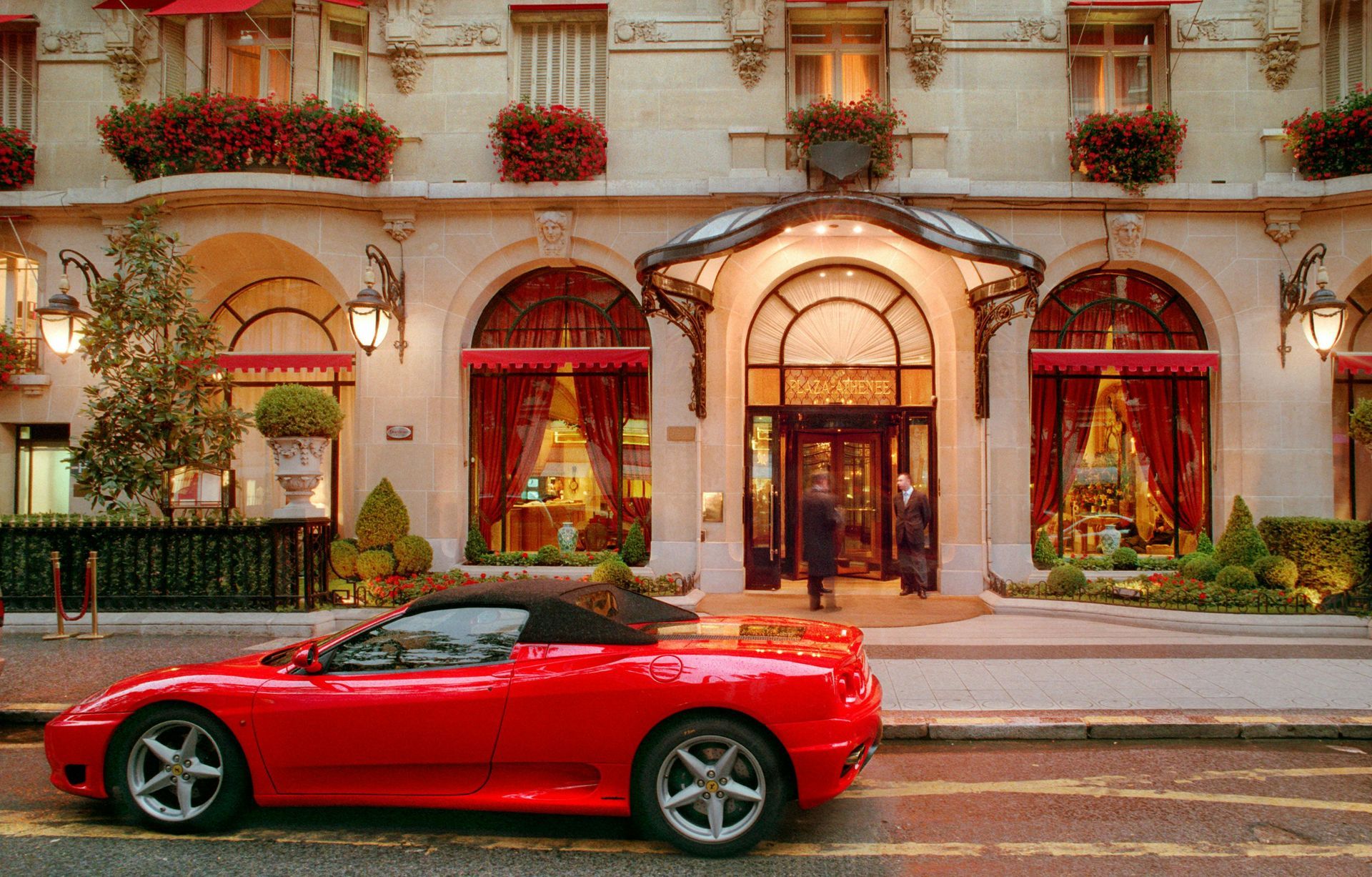
The 8th is where Paris presents itself at its grandest scale. The Champs-Elysees runs through the heart of it. The Arc de Triomphe anchors the western end, Place de la Concorde the eastern. The triangle formed by the Faubourg Saint-Honore, Avenue Montaigne, and the surrounding streets contains the highest concentration of couture houses, fine jewelers, and Michelin-starred restaurants in the city. If you are staying in the 8th, you are choosing an address that communicates something about the trip. The luxury hotels here (Four Seasons George V, Plaza Athenee, Le Bristol) are destinations in their own right, not just places to sleep. That is the honest pitch for the 8th: it is not the most practical choice for first-timers, but it is the most impressive one. France Luxury Tour's exclusive private Paris tours pair naturally with a stay in this arrondissement, offering the same level of personalization and prestige across every element of the visit.
The honest trade-off: the 8th is less walkable to the Left Bank sights (Musee d'Orsay, Luxembourg Gardens, Latin Quarter) and has limited neighborhood dining culture below the luxury tier. If you are not eating at Michelin-starred restaurants, you will be Uber-ing to dinner. Budget considerations are also relevant: the 8th has almost no mid-range accommodation. Expect 350 euros and upward for a well-located property.
Montmartre (18th, Upper Hill): Best for Atmosphere and Character
Montmartre offers a Paris experience that feels meaningfully different from the central arrondissements. A village perched on a hill, with the Sacre-Coeur presiding at the summit, narrow winding streets descending through artist studios and vine-covered walls. The views from the Basilica steps across the whole of Paris are among the finest in the city. The critical distinction: where in Montmartre you stay matters enormously. The streets around Place du Tertre and the Basilica at the top of the hill are quieter, more atmospheric, and genuinely village-like. The streets at the base of the hill, particularly around Pigalle and lower Boulevard de Clichy, are noisier, less charming, and not where first-time visitors should be. If you are booking in Montmartre, confirm the property is on the upper hill before you commit.
The honest trade-off: Montmartre is not centrally located. Getting to the Louvre, the Marais, or the Left Bank requires Metro journeys that add 20 to 30 minutes each way. For a day trip to Versailles or Disneyland Paris, the location is actually advantageous (good train connections from Gare du Nord nearby). For a week of intensive Paris sightseeing, it is a less efficient base than any of the central arrondissements. Prices: expect 130 to 220 euros per night for a good boutique property on the upper hill.
Quick-Pick Guide: Best Neighborhoods in Paris for Tourists
Use this as a fast-reference version of the full neighborhood guide above. This is a Paris arrondissements guide for visitors condensed into a single table.
| You are... | Best neighborhood | Why |
|---|---|---|
| A first-timer wanting all-round convenience | Le Marais (3rd/4th) | Medieval streets, walkable to Notre-Dame, great food and nightlife, strong Metro links. The most forgiving base if your plans change. |
| A couple wanting classic Parisian atmosphere | Saint-Germain / Latin Quarter (5th/6th) | Literary cafes, quieter evenings, Musee d'Orsay on the doorstep, Luxembourg Gardens in the morning. Genuinely romantic without feeling staged. |
| A family with young children | 7th Arrondissement | Champ-de-Mars for open space, residential calm, low crime, excellent family restaurants. Eiffel Tower on the doorstep. |
| A traveler who wants central location above all | 1st Arrondissement | Louvre across the street, Tuileries Garden, Seine on the southern edge. Pays a premium but nothing is closer. |
| A luxury traveler who wants prestige and grandeur | 8th Arrondissement | Champs-Elysees, couture houses, Michelin-starred restaurants, the city's best luxury hotels. The address communicates the trip. |
| A solo traveler or creative visitor wanting character | Montmartre, upper hill (18th) | Village feel, Sacre-Coeur views, artist studios, slower pace. Stay on the upper hill, not near Pigalle. |
If the decision still feels difficult after consulting the table above, it often helps to think about how you plan to spend your days rather than where specific hotels are located. France Luxury Tour's Paris luxury tour packages can be built around any of these bases, with private transport and expert guidance meaning that your neighborhood becomes your home rather than your constraint.
Safest Areas to Stay in Paris
The safest areas to stay in Paris question comes up in every first-timer planning conversation, and it deserves a specific answer rather than a reassuring generalization. Paris is a broadly safe city for tourists. Violent crime against visitors is rare across all the neighborhoods covered in this guide. The risks that do exist are almost entirely opportunistic theft: pickpocketing on the Metro, bag snatching in crowded tourist areas, and distraction scams around major landmarks.
By neighborhood, the safety picture breaks down as follows. The 7th arrondissement consistently records among the lowest crime rates in Paris and is the most straightforwardly safe neighborhood for families and solo travelers. The 1st, 3rd, 4th, 5th, 6th, and 8th arrondissements all have low violent crime rates but higher rates of pickpocketing, particularly in tourist-heavy areas. Montmartre's upper hill is safe; the area around Pigalle and lower Boulevard de Clichy is noisier and less comfortable late at night, particularly for solo female travelers.
Practical theft-prevention steps that actually help: use a bag with a zip rather than an open tote in crowded areas, keep your phone in a front pocket or zipped compartment on the Metro, be alert at ATMs (particularly around Gare du Nord and in tourist crowds near major landmarks), and be skeptical of anyone who approaches you with a petition, a ring, or an offer to help with your luggage. These are the scenarios where most tourist theft in Paris occurs.
When to Book Paris Accommodation
As a Paris accommodation guide for first timers, here is the booking timeline that works for most travel styles:
- •Peak season (June to August): Book three to six months in advance. July in particular: the most desirable central hotels fill 4 to 5 months out. Last-minute availability in July tends to be expensive or badly located.
- Shoulder season (April, May, September, October): Six to eight weeks is generally sufficient for most neighborhoods. Boutique hotels in the Marais and Saint-Germain fill faster than this regardless of season. Book eight weeks out to be safe.
- Paris Fashion Week (February/March and September/October): Book as if it were peak season. Hotel prices spike and availability tightens sharply across all central arrondissements during Fashion Week weeks.
- Roland Garros (late May to early June): Same principle. Demand from tennis visitors affects the 7th and 8th in particular. Book early.
- French public holidays: Book early regardless of which month they fall in. Bastille Day (July 14) and the long weekend around Ascension Day are the two that most affect availability for visitors.
- Paris Neighborhoods to Avoid for First-Timers
Paris is a safe city and none of its central neighborhoods should cause genuine alarm for a first-time visitor. But some areas are simply poor choices for a first trip, not because they are dangerous but because they add commute time and logistical friction without adding proportional value. The outer arrondissements, particularly the 19th and 20th on the northeastern edge of the city, are authentic residential neighborhoods that Parisians love. They are not well placed for first-time visitors who want to spend their days seeing Paris rather than commuting to it. From the 20th to the Louvre is around 45 minutes on public transport each way. Over a five-day trip that adds up.
The area around Gare du Nord and Gare de l'Est deserves a specific note. Both stations are transport hubs with efficient Metro and RER connections to the rest of Paris, which makes them appealing for budget accommodation searches. The neighborhoods immediately surrounding both stations are impersonal, have higher petty theft rates than the central arrondissements, and do not represent Paris at its best. If cost is the driver and you are considering this area, factor in the daily commute to central Paris and the less pleasant street-level experience. For most first-time visitors, spending an extra 20 to 30 euros per night for a Marais or Latin Quarter location is the better value decision overall.
Ready to Plan Your Paris Stay?
The short version of this Paris accommodation guide for first timers: for most first-time visitors, the Marais is the strongest starting point. Saint-Germain for couples who want romance and calm. The 7th for families. The 1st for milestone trips with flexible budgets. The 8th for luxury. Montmartre for character, upper hill only. None of these are wrong choices if they match your travel style. The neighborhoods that create difficult trips are the ones that do not: the outer arrondissements, the transport hub areas, and the budget properties that look central on a map but take 40 minutes to reach anything on your list.
If you would like expert help matching your travel style, travel dates, and Paris ambitions to the right neighborhood and itinerary, France Luxury Tour's travel designers are ready to help.
Get in touch with us to start planning a Paris visit that feels exactly right from the very first day.