Paris can feel genuinely overwhelming for first-time visitors. Centuries of history are stacked onto every street, and the list of famous historical sites Paris visitors feel obligated to see grows longer the more you research. Most people spend three days ticking off landmarks they barely remember afterward, when a little context would have made each one unforgettable. This guide cuts through the noise, pairing each must-see Paris landmark with the historical context that makes it meaningful. Combine it with Paris luxury tours for a seamlessly guided experience.
This article covers the Paris history attractions that genuinely matter on a first visit, from medieval cathedrals to Napoleonic monuments. Each entry explains what the site represents historically and offers practical advice so you spend less time queuing and more time understanding what you are looking at.
Notre-Dame Cathedral
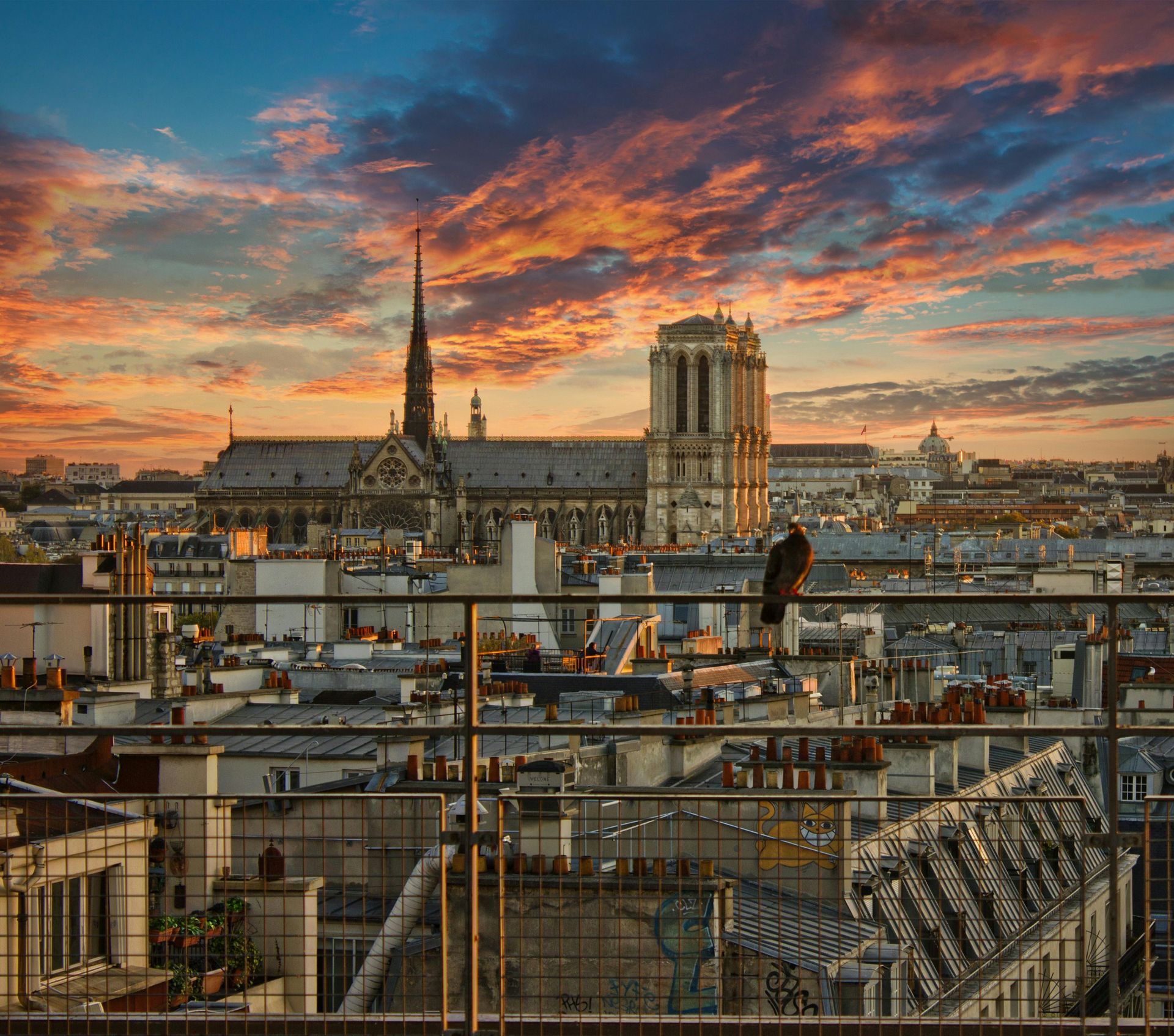
Notre-Dame's construction began in 1163, making it one of the earliest and finest examples of French Gothic architecture anywhere in the world. Its flying buttresses, soaring nave, and three rose windows set a template that influenced cathedral design across Europe for centuries. Few historic places in Paris carry the same weight of continuous human history in a single structure.
The cathedral has witnessed coronations, revolutions, and Napoleon's self-coronation in 1804. The 2019 fire that destroyed the spire and much of the roof shocked the world precisely because Notre-Dame felt permanent, mythological almost. Standing inside the restored nave today, you notice something unexpected: the stone is almost too clean, a brightness that feels faintly wrong after centuries of images showing it dark and candlelit. That strangeness is worth sitting with. Restoration work is now complete, and the cathedral reopened in December 2024 to considerable international attention.
Visiting today means experiencing both the restored interior and the remarkable Ile de la Cite setting that surrounds it. Walk the full perimeter of the island, cross to the Left Bank for the classic exterior view, and take time in the small park behind the apse. The view from behind the apse, looking up at the flying buttresses, is honestly better than the front facade and almost nobody makes the walk. The architecture earns its reputation most fully when you give it space to breathe.
The Louvre Museum
The Louvre began as a medieval fortress before becoming a royal palace under Francis I in the 16th century. After the French Revolution, it was converted into a public museum in 1793, placing the monarchy's private art collection in the hands of citizens. That act of transformation is itself one of the most significant moments in the story of Paris history attractions.
Today it holds over 35,000 works across three wings, which means a single visit requires strategy. The Mona Lisa is worth seeing once, but the crowd around it is genuinely unpleasant and the painting is smaller than almost everyone expects. If that is your main reason for going to the Denon Wing, consider skipping it and spending that time with the Winged Victory of Samothrace at the top of the Daru staircase instead it stops people cold in a way the Mona Lisa, behind its barriers, cannot. First-timers should choose one section: the Denon Wing for the Mona Lisa, Venus de Milo, and Winged Victory, or the Richelieu Wing for French royal apartments and Dutch masters. Trying to see everything produces fatigue, not appreciation.
Book timed entry tickets online in advance, arrive at opening, and head immediately toward whichever highlight matters most before the crowds build. The glass pyramid entrance, designed by I.M. Pei and completed in 1989, is itself a landmark worth pausing over. It represents exactly the kind of confident architectural layering that defines Paris at its best.
Eiffel Tower
Gustave Eiffel built his tower as a temporary structure for the 1889 World's Fair, celebrating the centenary of the French Revolution. Parisians initially loathed it, dismissing it as an eyesore of iron and industrial arrogance. It was scheduled for demolition after twenty years but was saved by its usefulness as a radio transmission tower. The gap between that grudging survival and its current status as the most photographed structure on earth is one of the more satisfying reversals in architectural history.
What makes it genuinely moving as a Paris history attraction is what it represents: France's declaration, in steel, of its industrial and republican confidence at the end of the 19th century. Standing underneath its latticed arches and looking straight up is one of those experiences that resists cynicism even if you arrived feeling too cool for it.
Book tickets online well in advance, particularly for summit access, which sells out days or weeks ahead in peak season. The second floor offers views that are honestly just as good as the summit and the queues are half the length, worth considering if you are visiting in July or August. An early morning visit minimizes queues and offers the best light for the surrounding Champ de Mars. The evening light show, running on the hour after dark, is free to watch from the lawns and worth staying for.
Palace of Versailles
Versailles is not just a palace. It is the physical embodiment of absolute monarchy, built by Louis XIV in the 17th century as a deliberate statement that all power in France radiated from a single man. The Hall of Mirrors, stretching 73 metres along the western facade, was designed specifically to dazzle foreign ambassadors into submission. It succeeded comprehensively for over a century.
Understanding Versailles is essential to understanding the French Revolution. The extravagance on display here is precisely what made revolution feel not just justified but inevitable to a starving population. Walking those gilded rooms with that context in mind changes the experience entirely, from a tour of opulence into a study of how power eventually consumes itself. It also makes the Hall of Mirrors feel slightly sinister in a way that guidebooks tend to skip over.
Versailles sits 40 minutes from central Paris by RER C train, making it an easy and essential day trip. Get there before 10am if you possibly can. Tour groups arrive in force from around 10:30 and the State Apartments become genuinely unpleasant. Dedicate at least half a day, and include the formal gardens designed by Andre Le Notre, which are as calculated and magnificent as the interiors. For those wanting to go further, a private Versailles secret rooms tour opens areas of the palace that public visitors never reach.
Sainte-Chapelle
Built between 1242 and 1248 on the orders of Louis IX, Sainte-Chapelle was constructed to house the crown of thorns and other relics the king had purchased from the Byzantine Empire at extraordinary expense. The entire architectural logic of the building is structural minimalism in service of glass. Stone is reduced to the bare minimum so that windows could fill the walls entirely.
The upper chapel contains fifteen panels of stained glass rising 15 metres high, depicting over 1,000 scenes from the Old and New Testaments. On a sunny morning, the light inside shifts from deep blue to burning red and amber as you move around the space. The effect is less like standing in a building and more like standing inside a lit manuscript page, which sounds like hyperbole until you are actually in there.
Sainte-Chapelle sits on the Ile de la Cite, a short walk from Notre-Dame, making it a natural pairing on the same morning. Visit between 9am and 11am on a clear day for the strongest light through the glass. If the sky is overcast when you arrive, it is worth waiting 20 minutes for a break in the clouds rather than moving on, the difference is dramatic. Security queues move reasonably quickly. This is one of the Paris historical sites most consistently underrated by visitors who allocate their time elsewhere and later regret it.
Arc de Triomphe
Napoleon commissioned the Arc de Triomphe in 1806 following his victory at Austerlitz, intending it as a monument to the glory of his armies. He never saw it completed: construction finished in 1836, fifteen years after his death. The arch's friezes depict Napoleonic battles in extraordinary detail, and the names of 660 French generals are inscribed on its interior walls. Most visitors walk straight past these friezes to get to the lift, which is a shame, the carvings at eye level on the north pillar are among the finest public sculpture in Paris.
Beneath the arch today lies the Tomb of the Unknown Soldier, a burial from World War I that was interred here in 1920. An eternal flame has burned continuously ever since, renewed each evening in a short ceremony at 6:30pm that is free to attend and quietly moving. The arch balances Napoleonic ambition with the weight of collective sacrifice in a way that rewards reflection.
Climb to the rooftop platform (tickets required, purchased on-site or online) for one of the best panoramic views in Paris. Twelve avenues radiate outward from the Place de l'Etoile below, including the Champs-Elysees stretching toward the Louvre. The roundabout directly below is the most chaotic traffic circle in Europe and watching it from above, particularly at rush hour, is genuinely entertaining in a way that has nothing to do with history. The walk down the Champs-Elysees afterward is one of the most satisfying ways to connect this must-see Paris landmark back to the city's broader story.
Montmartre and Sacre-Coeur
Montmartre's position on the highest hill in Paris made it a village separate from the city until the late 19th century, which shaped its distinctive character. As rents rose in central Paris, artists including Picasso, Modigliani, and Toulouse-Lautrec settled in Montmartre. The Bateau-Lavoir studios on Place Emile Goudeau became one of the most productive creative addresses in modern art history. Almost none of that artistic atmosphere survives in Place du Tertre today, which is now almost entirely tourist caricature artists and overpriced cafes. That is worth knowing before you arrive.
Sacre-Coeur Basilica, completed in 1914, was built as a statement of Catholic atonement following France's defeat in the Franco-Prussian War. Its white travertine exterior brightens naturally over time rather than darkening, which explains its luminous appearance. The view from the front steps across the rooftops of Paris is one of those moments that tends to stop first-time visitors completely in their tracks.
Allow at least two hours in Montmartre, and consider arriving by 8:30am before the tour groups reach the hilltop. Walk the rue Lepic market street, sit in Place du Tertre if you want to see what it looks like (you can skip buying anything), and find the vineyard on rue des Saules that has been harvesting grapes since 1933. Montmartre rewards the kind of unhurried exploration that famous historical sites Paris visitors sometimes sacrifice in favor of ticking boxes.
Suggested first-time itinerary
Three days is the minimum needed to experience Paris historical sites without feeling rushed. The structure below groups landmarks geographically and thematically to maximize time and minimize doubling back across the city.
Day 1: Medieval and central Paris
Start at Sainte-Chapelle when it opens, then walk five minutes to Notre-Dame and the Ile de la Cite. Cross to the Left Bank for lunch, then dedicate the afternoon to the Louvre. Focus on one wing only. Do not try to do both Sainte-Chapelle and the Louvre justice in the same day if you are a slow browser, one will suffer. End the day with a walk along the Seine at dusk.
Day 2: Iconic monuments and Montmartre
Begin at the Eiffel Tower early to beat queues, then cross the river to the Arc de Triomphe for the rooftop view. Walk the Champs-Elysees toward the Tuileries. Take the metro to Montmartre in the late afternoon, when the light on Sacre-Coeur is warmest and the hilltop crowds thin slightly.
Day 3: Versailles day trip
Take the RER C from central Paris by 9am to reach Versailles ahead of tour groups. Spend the morning in the State Apartments and Hall of Mirrors, the afternoon in the gardens. Return to Paris by early evening. If your feet give out before the gardens do, the Grand Canal path is flat and shaded and makes a reasonable retreat. Travelers wanting deeper storytelling throughout this itinerary can explore history and culture tours built around exactly this kind of curated pacing.
Ready to plan your visit?
The thing that surprises most first-time visitors is not how impressive the individual landmarks are, it is how well they connect. Notre-Dame and Sainte-Chapelle are a ten-minute walk apart and span 600 years of religious architecture. Versailles explains the French Revolution in a way no textbook does. The Arc de Triomphe and the Louvre sit at opposite ends of a straight line Napoleon himself designed.
Paris historical sites reward visitors who treat history as a thread rather than a checklist. Each landmark connects to the next, and knowing even a little of the backstory before you arrive changes what you see when you get there.
Planning that kind of coherent, well-paced experience is considerably easier with expert guidance. Contact the France Luxury Tour team to design a first trip to Paris built around the sites and stories that matter most to you.